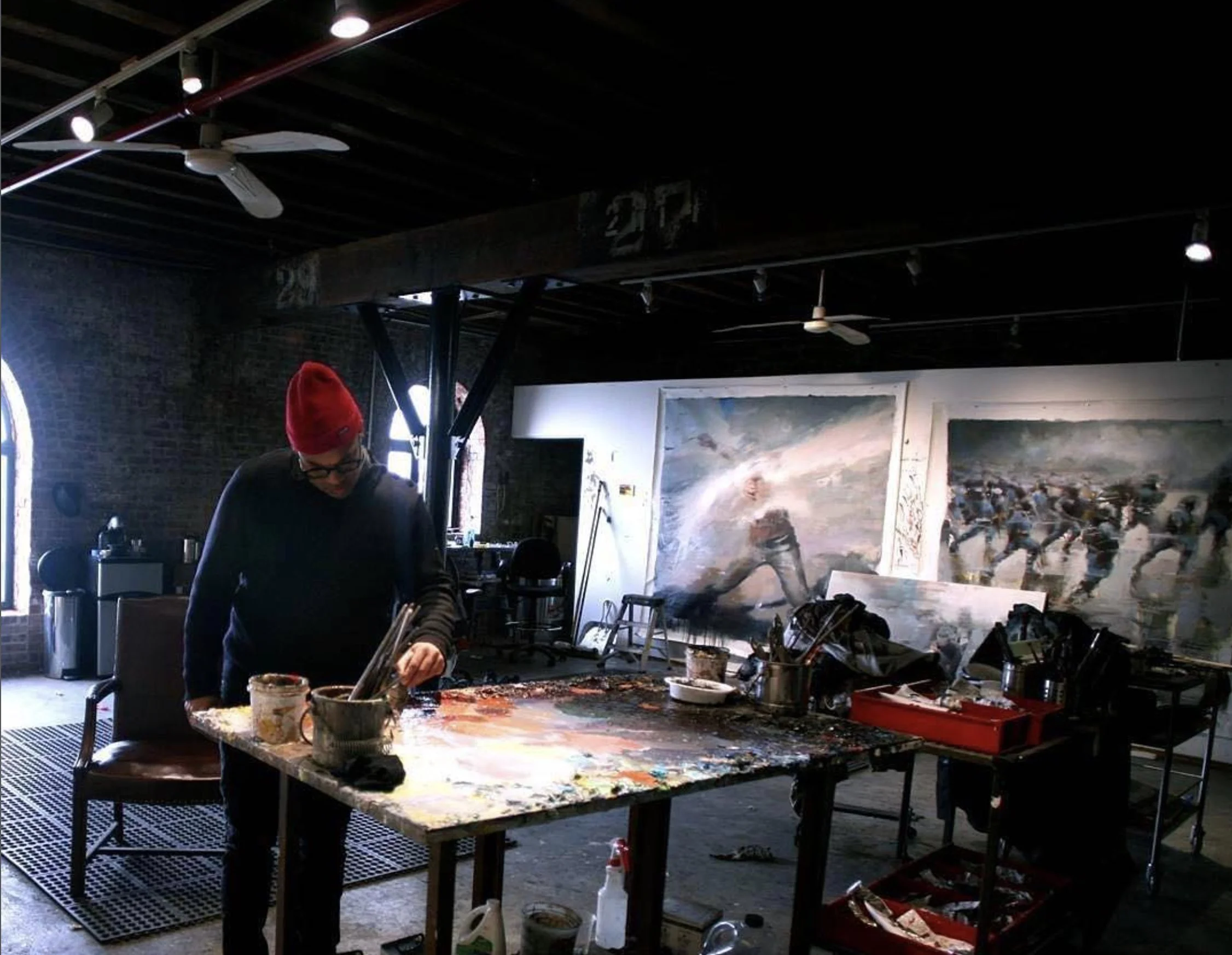
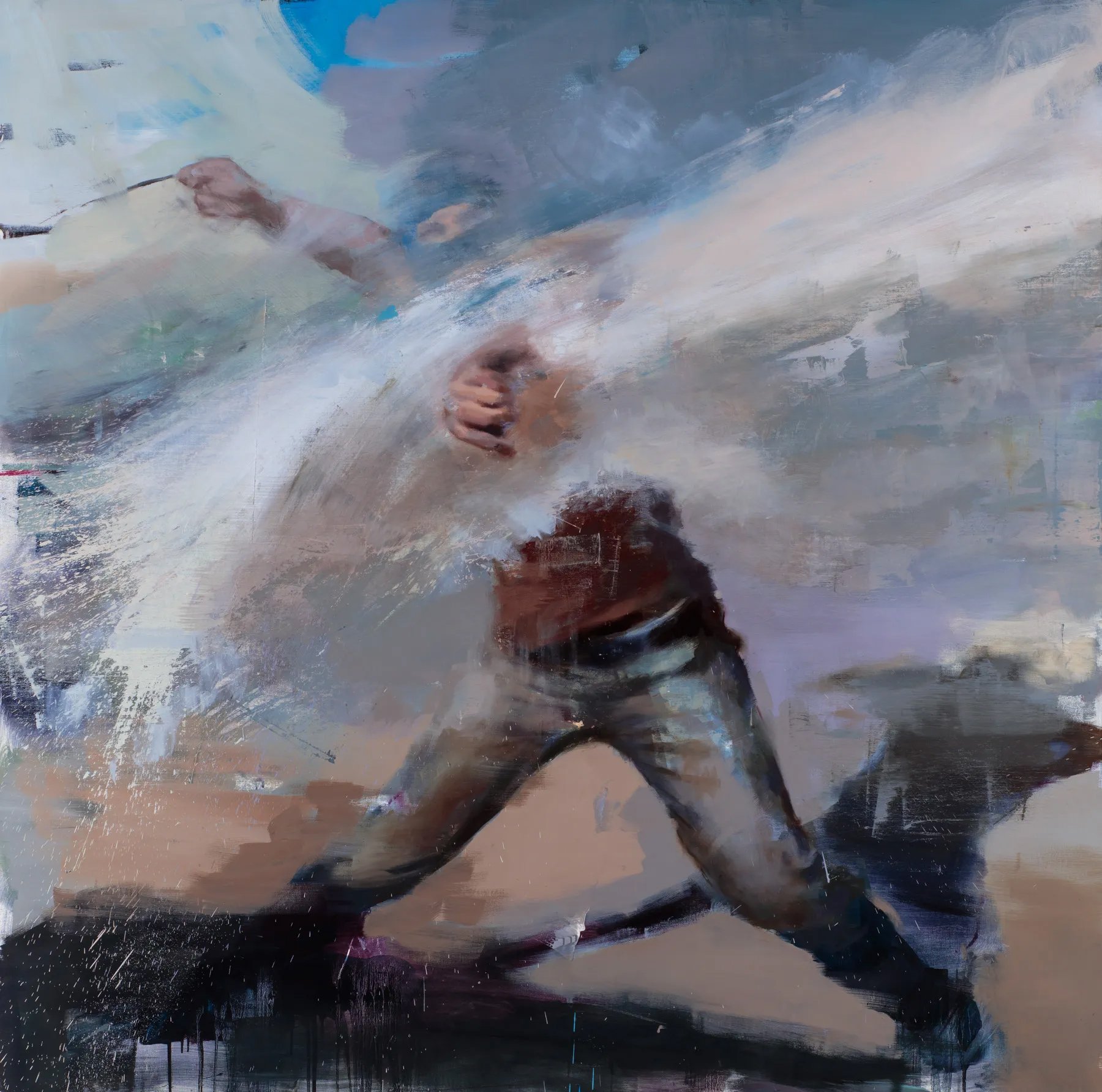
Jérôme Lagarrigue documents what society is going through, almost constantly. He paints what the news show us for a moment; and then take away. Riot police advancing in formation. A figure mid-throw, arm extended against a blur of shields and smoke. The desperate, terrifying choreography of people and power colliding in the streets of capital cities around the world. Images that saturate the news and social media feeds; then vanish, replaced by the next eruption, the next urgent frame.
He has been painting these scenes for years, stripped of geography and headline, rendered slowly, with full attention, in a medium that refuses the speed at which they were consumed. Each painting is an act of refusal: a refusal to let the image disappear.
But The Riot Within is not simply about the street. It’s about human beings too. The title names something more intimate, private and more difficult. A loss, a fracture, a rupture, a breakup, a knock down, a disappointment... Grief, shock, violence and dislocation all running concurrently, as they do in a life: not tidily sequential but overlapping, each situation and emotion reigniting the others. We’ve all been there, experienced it in one form or another, with varying levels of intensity and impact.
The title holds both truths at once. The riot in the world. The riot inside the human.
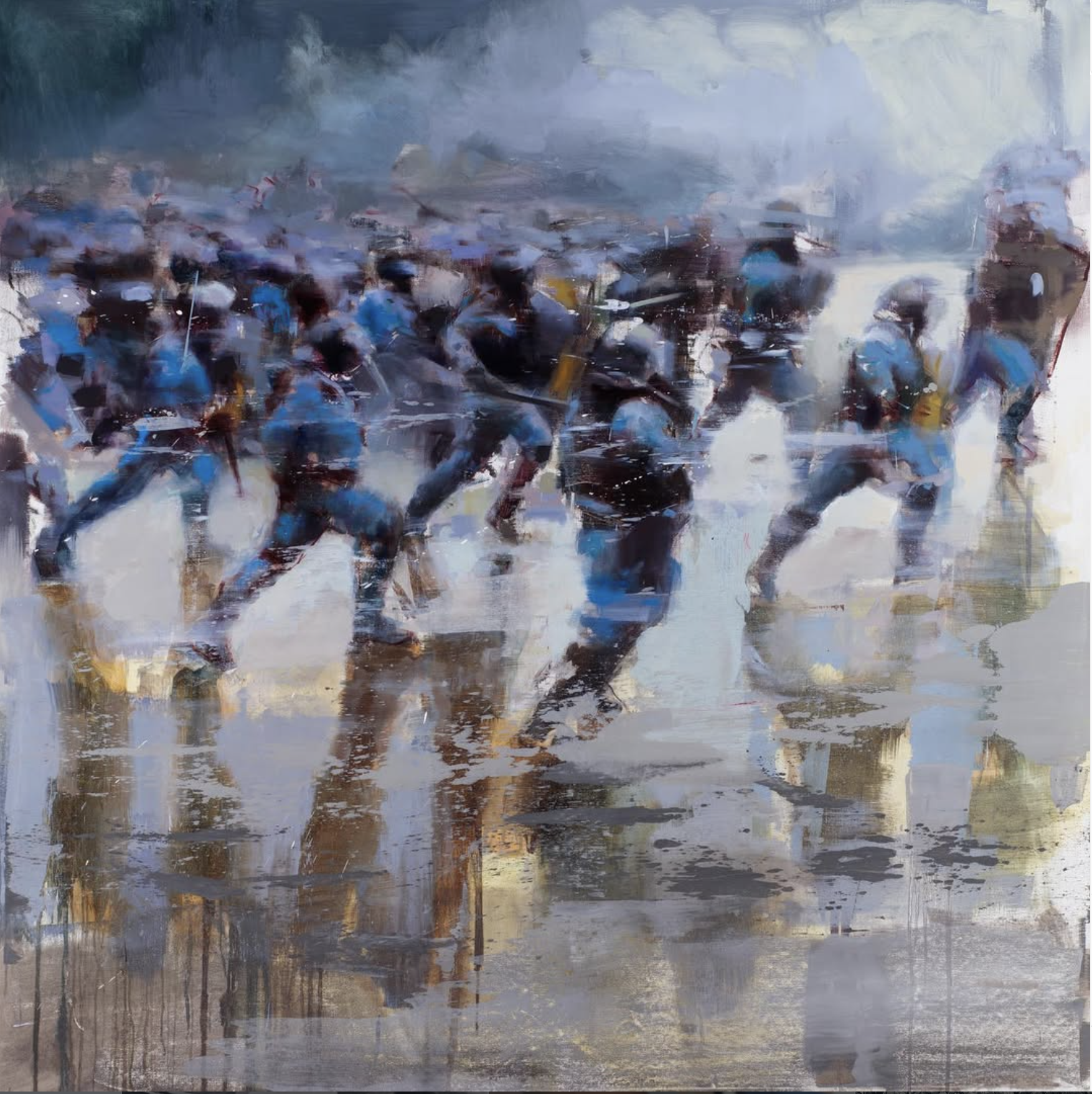
« The street and the self are not separate territories. They are the same upheaval, at different scales.»
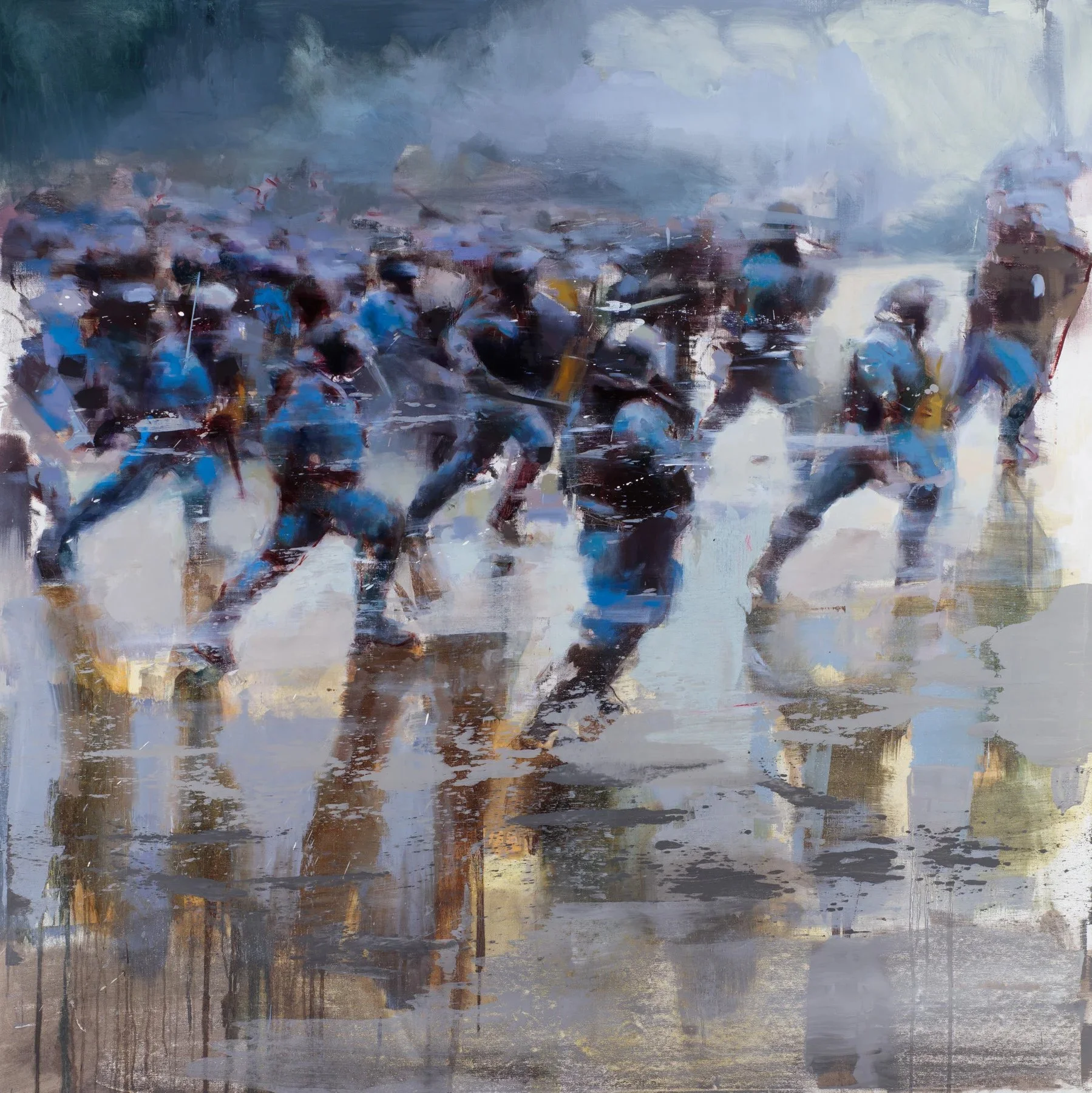
The Tipping Point
The Paradox He Has Chosen to Inhabit
Lagarrigue does not celebrate violence. He holds that position carefully and without apology. He has no interest in glorifying destruction, no desire to recruit the viewer to any particular cause.
But he is equally uninterested in the comfortable neutrality that refuses to distinguish between oppressor and oppressed. He believes — as James Baldwin believed, as Dr. Martin Luther King articulated from Birmingham Jail, as Nelson Mandela demonstrated across twenty-seven years of imprisonment — that when people pour into the streets at risk to their own safety, demanding to be seen and heard, they are performing one of the most serious acts available to a human being. It’s their duty. They deserve witness. They deserve more than a news cycle.
The paradox he occupies is the paradox of all serious documentary art: distance as a condition of truth. He is not on the barricade. He is in the studio in Brooklyn, working slowly, working in oil, working in a tradition that stretches back through Goya to Rubens. That distance is not a moral failure — it is what allows transformation. It is what turns the image from information into meaning.
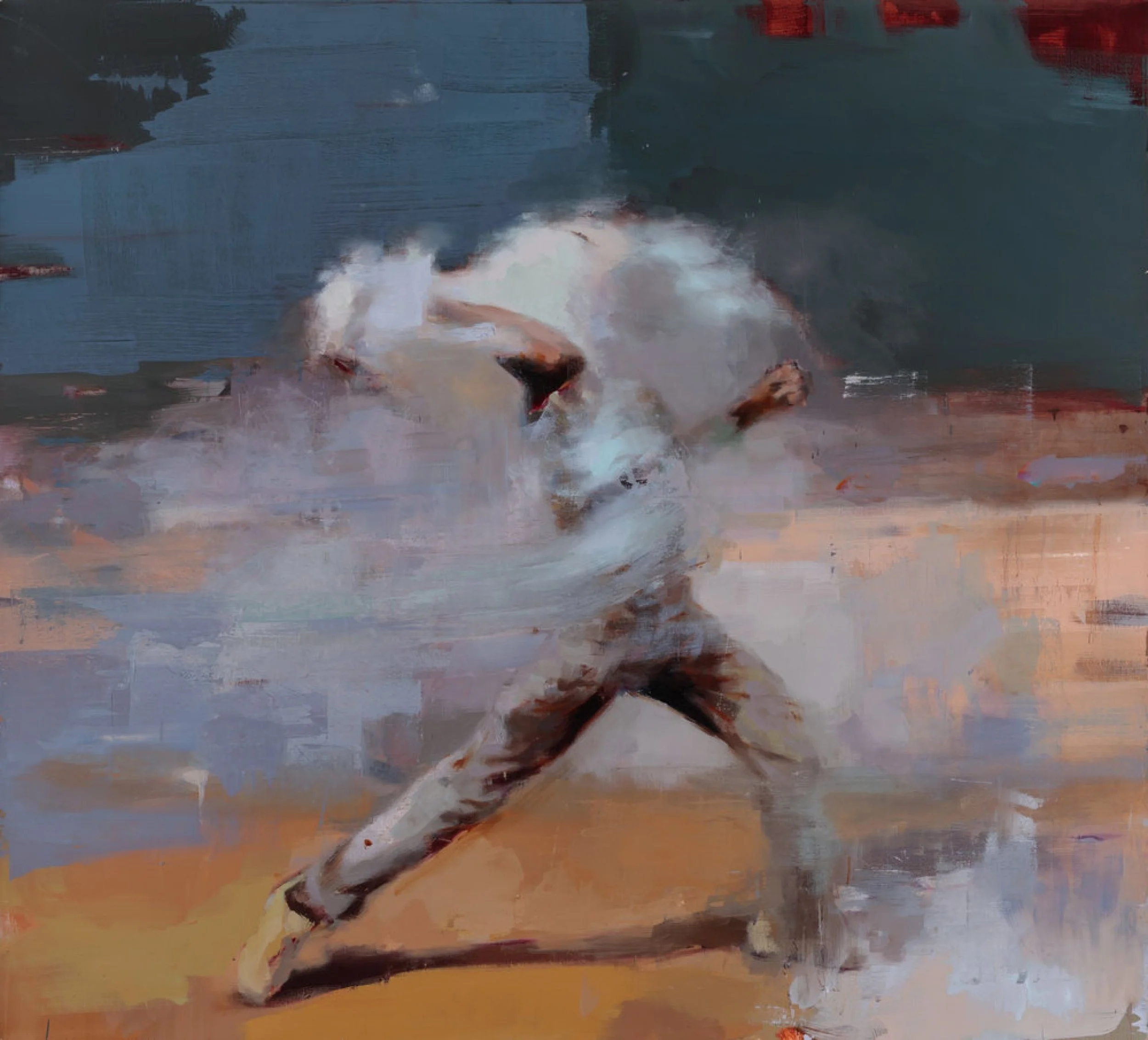
Lagarrigue has been through enough, in these recent years, to understand the value of permanence. Of making things that last. Of taking the volatile — grief, rage, love, the street in flames — and giving it a form that can be held and admired.
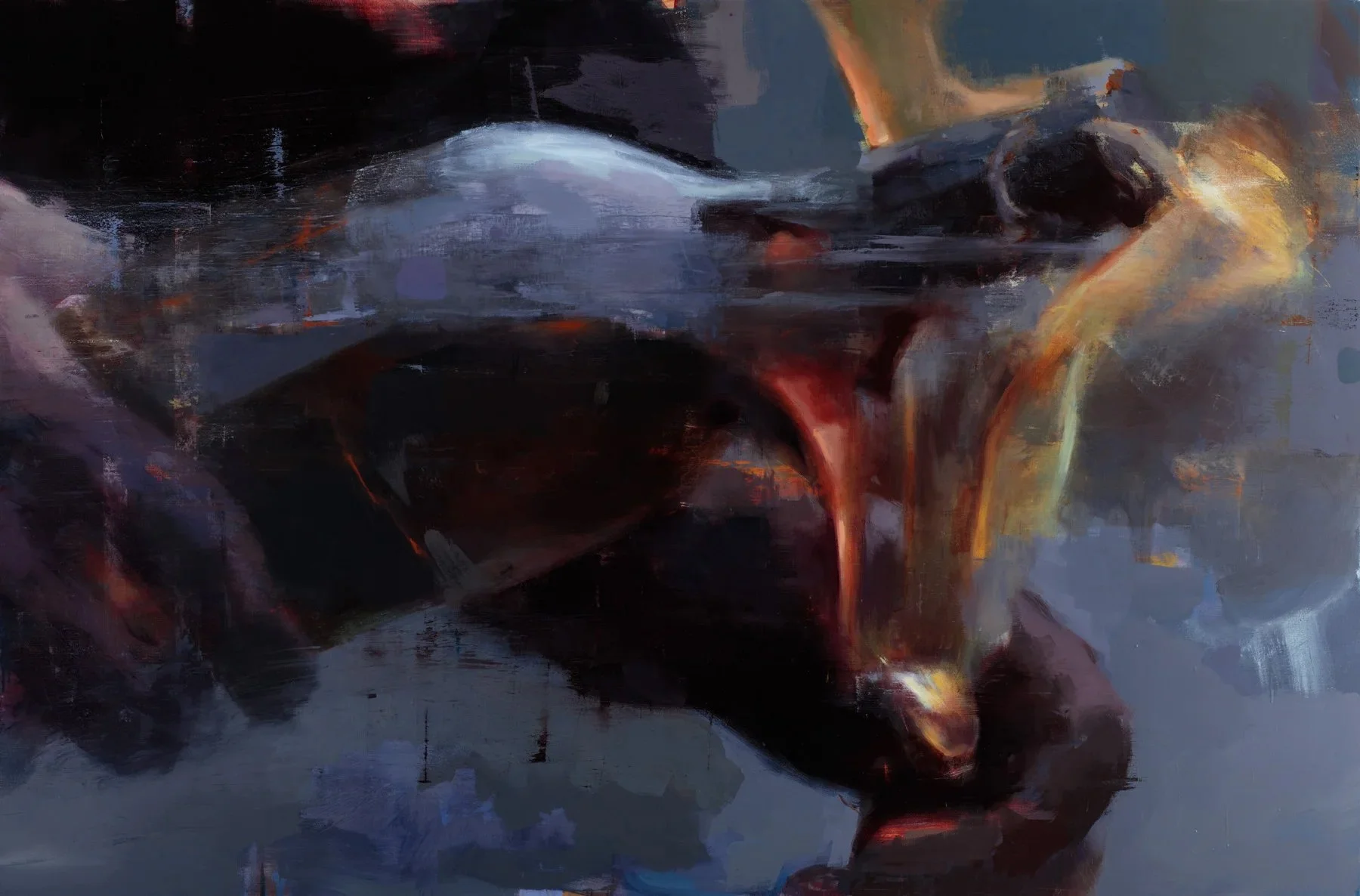
A limited and signed print series is, in its own way, a form of democratisation — an echo of the democratic impulse that animates the protest imagery itself. The original paintings exist in collections and institutions. The prints exist to be owned by those who were moved, who wanted to keep something of this reckoning in their lives.
There is also a formal logic. The print, reproduced from the original oil painting, carries its own translation: from the physical impasto of the brushstroke to the refined surface of the edition. Something is gained as well as lost. The image becomes portable, distributable — closer, in a way, to the press photograph it began as, but elevated, considered, permanently removed from the stream.
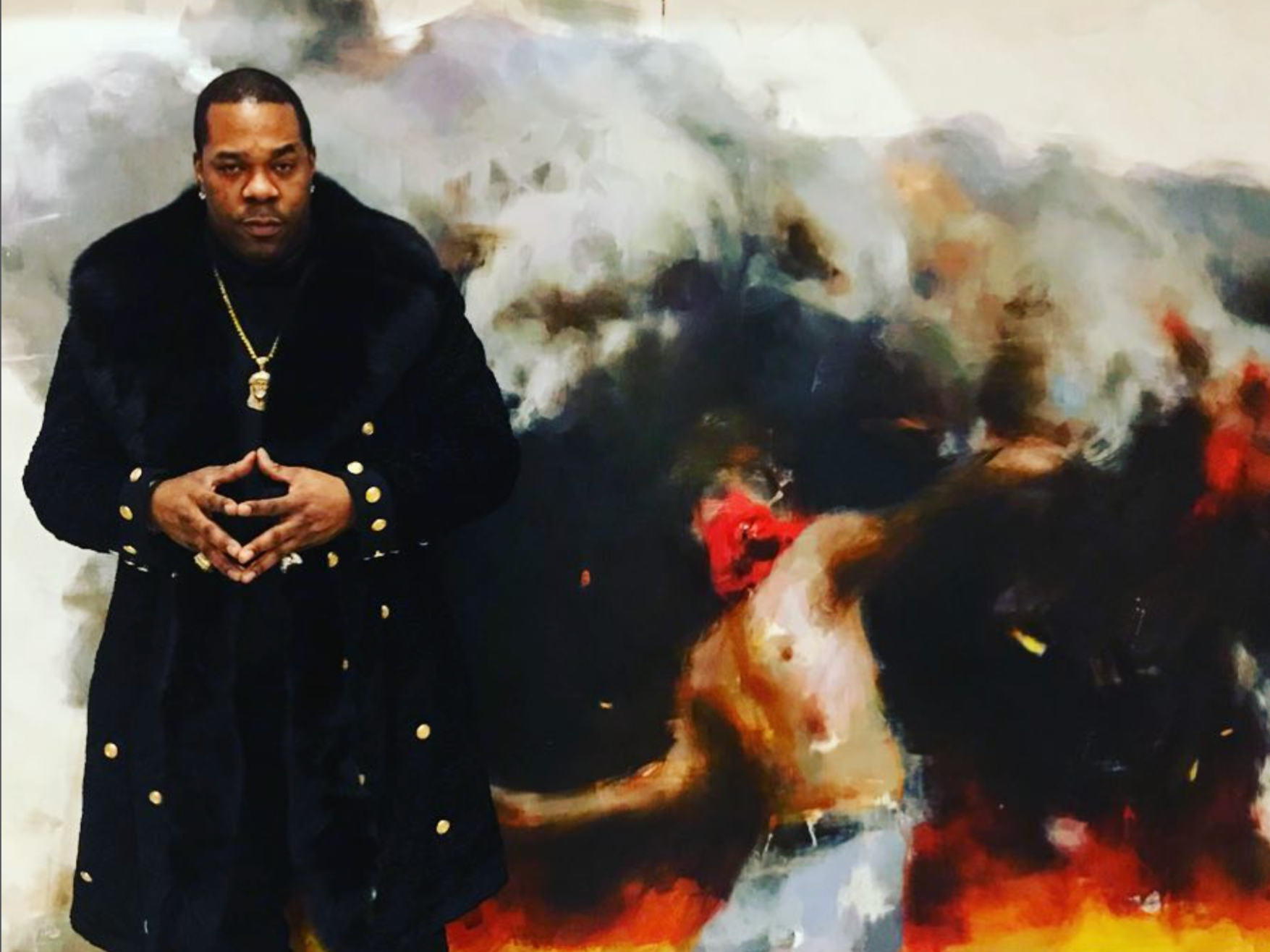
Lagarrigue has spoken of approaching these paintings as a filmmaker approaches a scene — each canvas a portal, a freeze-frame of collision designed to pull the viewer through the surface into the physical reality of the event. His technique enacts this: expressive brushstrokes and the spatula's edge, vivid colours, blurred passages that suggest motion, friction and uncertainty, tight framings that force intimacy with figures and scenes the viewer might prefer to observe from a safe remove.
But painting does something that film and photography cannot. It is irreducibly slow. It took weeks to make. It asks weeks to see — or at the very least, it asks the viewer to stop, to stand, to resist the scroll. In an information economy built on the rapid consumption and instant forgetting of exactly these images, that slowness is a powerful act in itself.
The smoke, the shields, the thrown object caught at its apex — rendered in oil, on canvas, at scale, they become permanent. They refuse to disappear into the feed. They say: this happened. It is still happening. Look.